Conversation with Lance Richlin on Classical Realist Art Forms and Spirituality
Publisher: In-Sight Publishing
Publisher Founding: March 1, 2014
Web Domain: http://www.in-sightpublishing.com
Location: Fort Langley, Township of Langley, British Columbia, Canada
Journal: In-Sight: Independent Interview-Based Journal
Journal Founding: August 2, 2012
Frequency: Three (3) Times Per Year
Review Status: Non-Peer-Reviewed
Access: Electronic/Digital & Open Access
Fees: None (Free)
Volume Numbering: 12
Issue Numbering: 3
Section: A
Theme Type: Idea
Theme Premise: “Outliers and Outsiders”
Theme Part: 31
Formal Sub-Theme: None.
Individual Publication Date: June 22, 2024
Issue Publication Date: September 1, 2024
Author(s): Scott Douglas Jacobsen
Word Count: 6,710
Image Credits: Lance Richlin.
International Standard Serial Number (ISSN): 2369-6885
*Please see the footnotes, bibliography, and citations, after the publication.*
Abstract
Lance Richlin is an award-winning Classical Realist painter and sculptor based out of Los Angeles, California. His full resume is here. Richlin discusses: Classical Realism; evolution of artistic work; part of the body hardest to put together on a canvas; how the Renaissance exemplified that balance of art presenting the body; the Rennaissance; painting, sculpting; first proper sale of a professional piece; making a living; things artists do with their skill set to survive; the aim and highest representation of Classical Realism in the early 21st century; Christian iconography; the Buddhist tradition; an orientation; the I Ching; a secular piece; a guy getting rejected; dark clouds; current philosophical and religious views; the ultimate hope; style of selecting art topics; series with comedy writer Rick Rosner; art connoisseurs artificial intelligence; and the nature of copyright.
Keywords: Classical Realism, Lance Richlin, traditional art techniques, Rembrandt vs. abstract art, modern Classical Realist artists, art schools and classical training, Renaissance art influence, spiritual insights in art, oil painting techniques, art market challenges, impact of AI on art industry, Baroque Era art influences.
Conversation with Lance Richlin on Classical Realist Art Forms and Spirituality
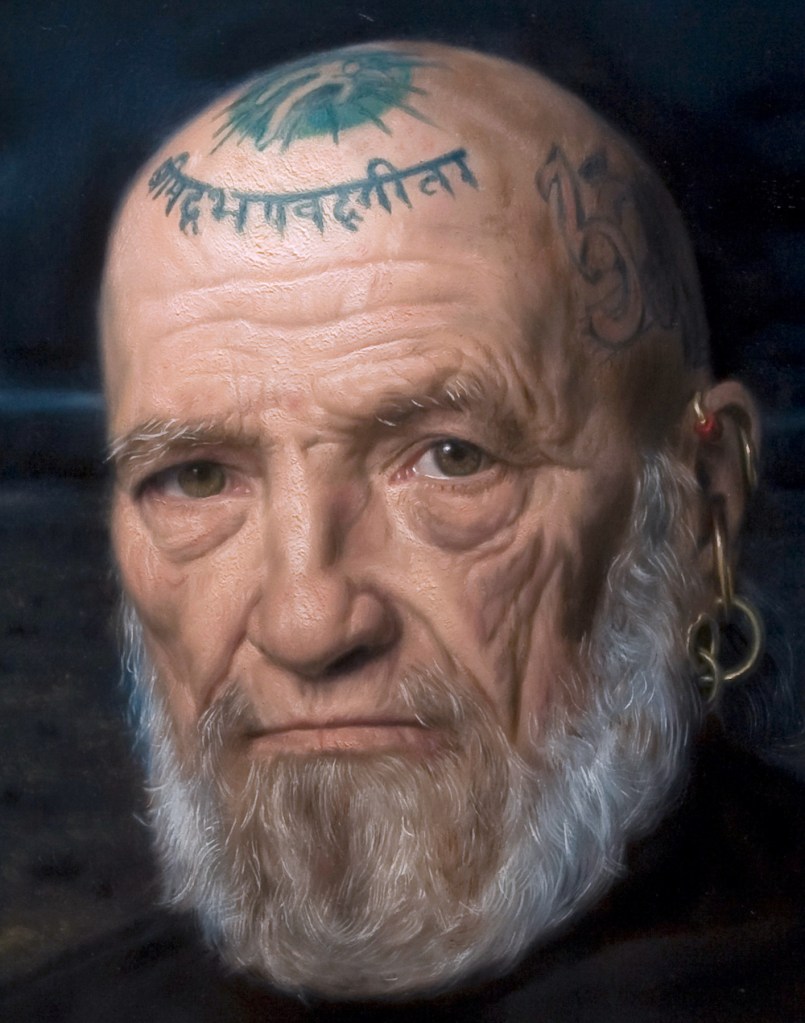
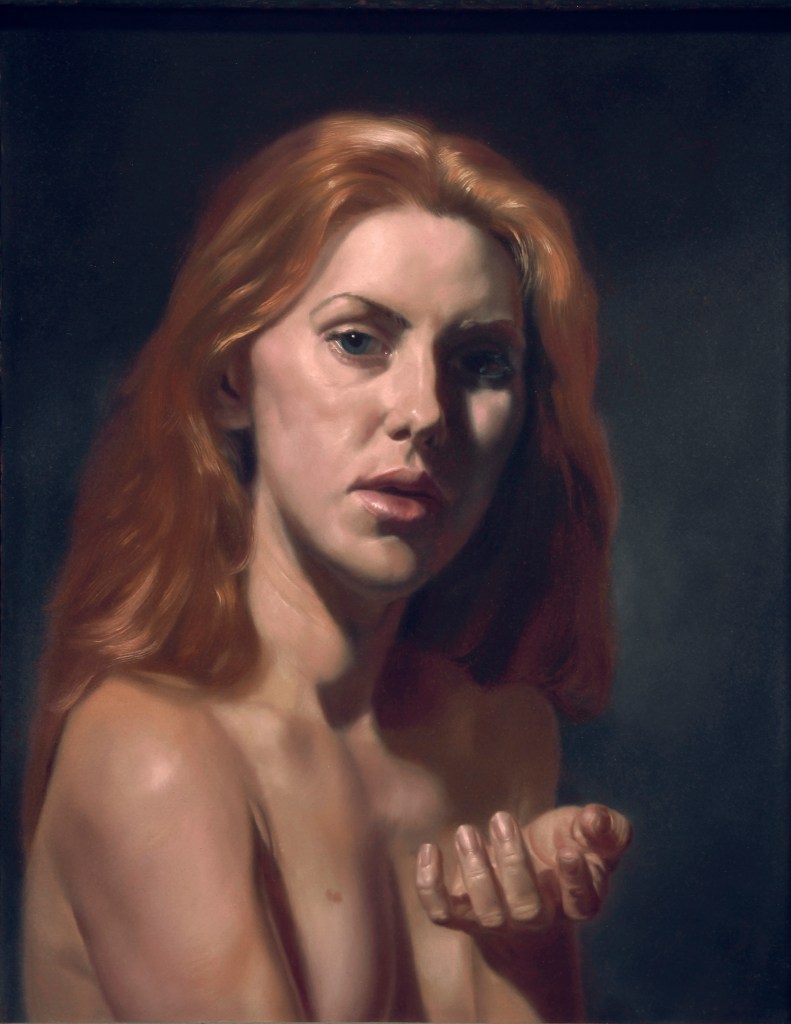
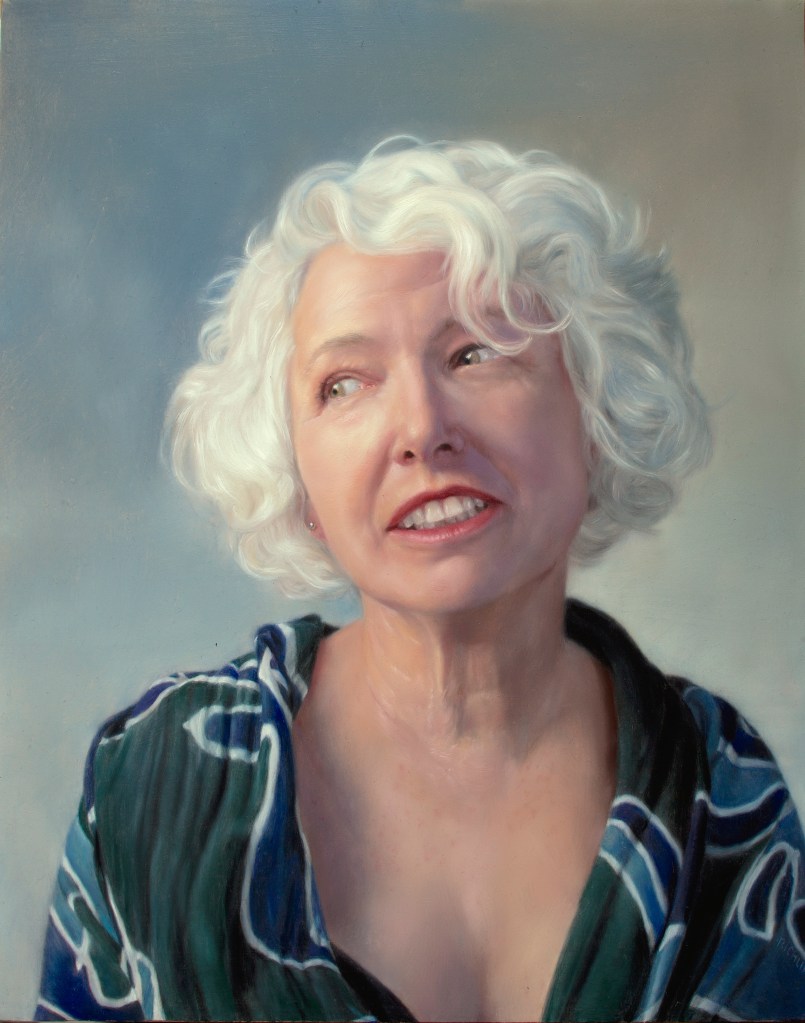
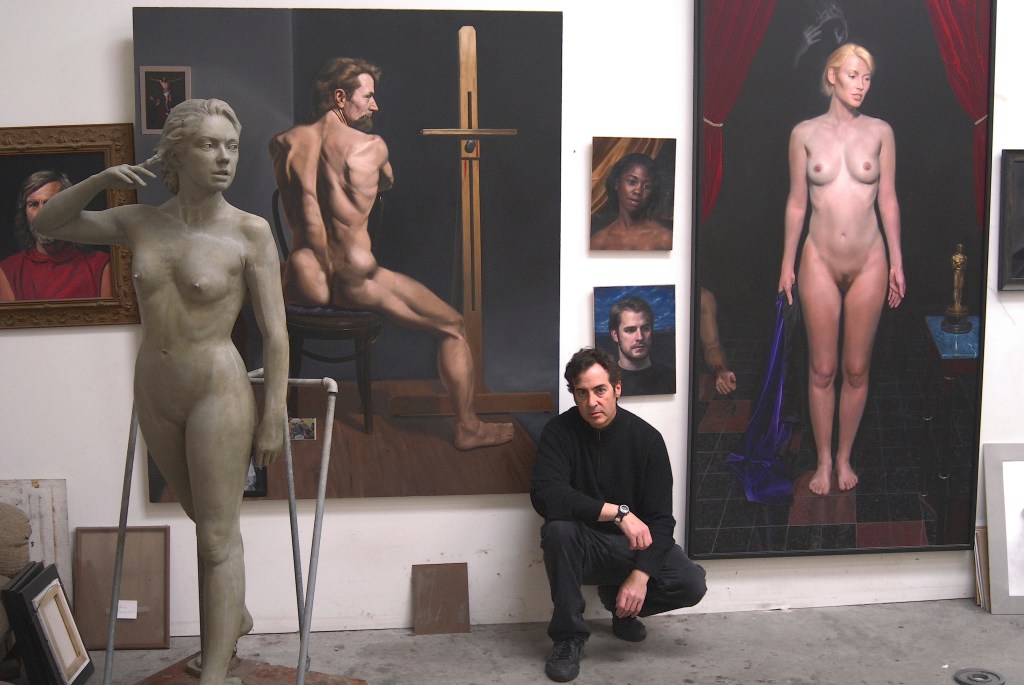
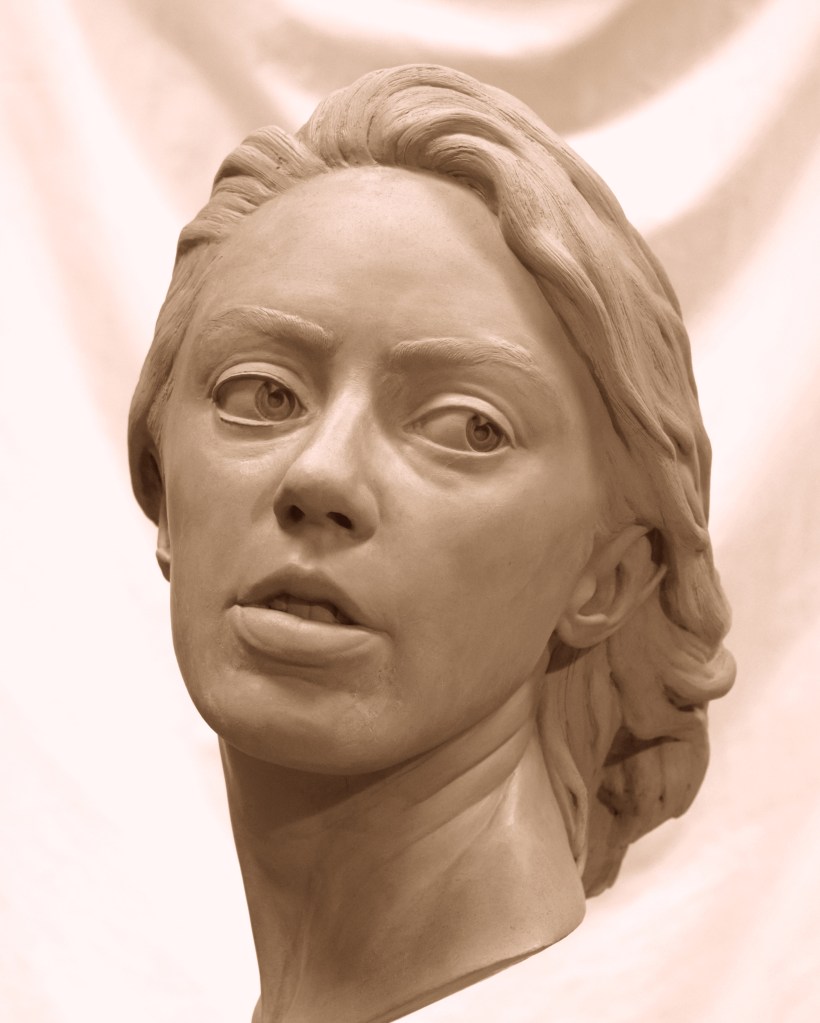
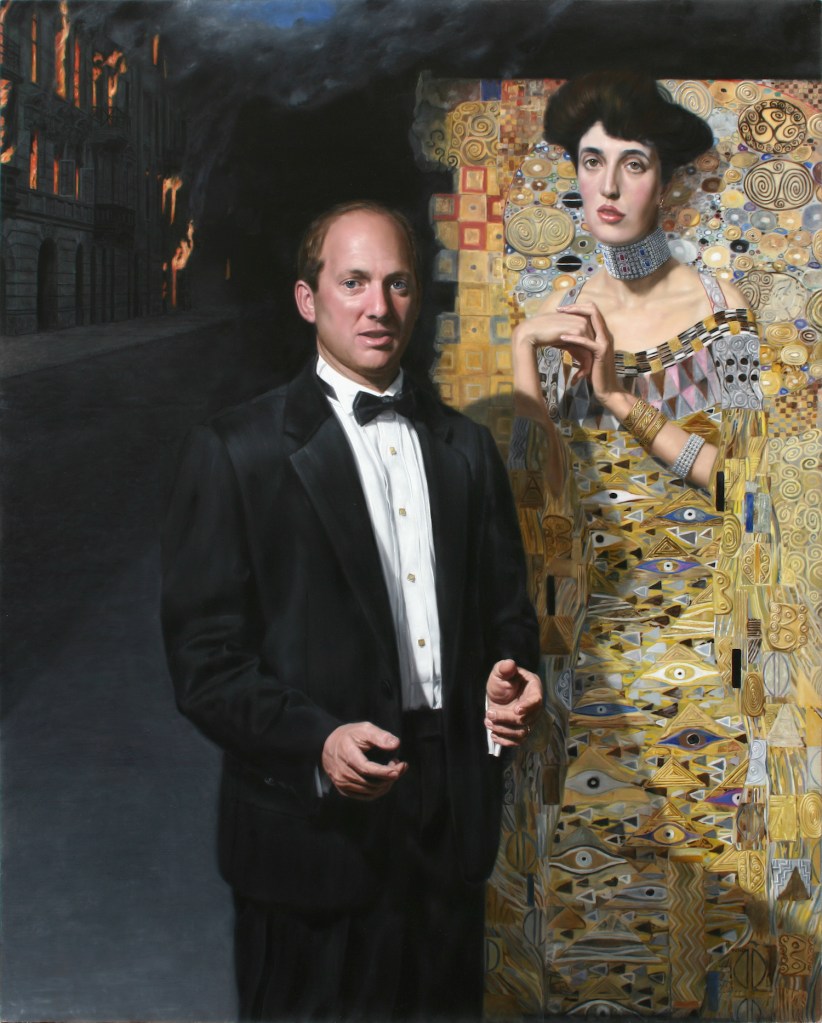
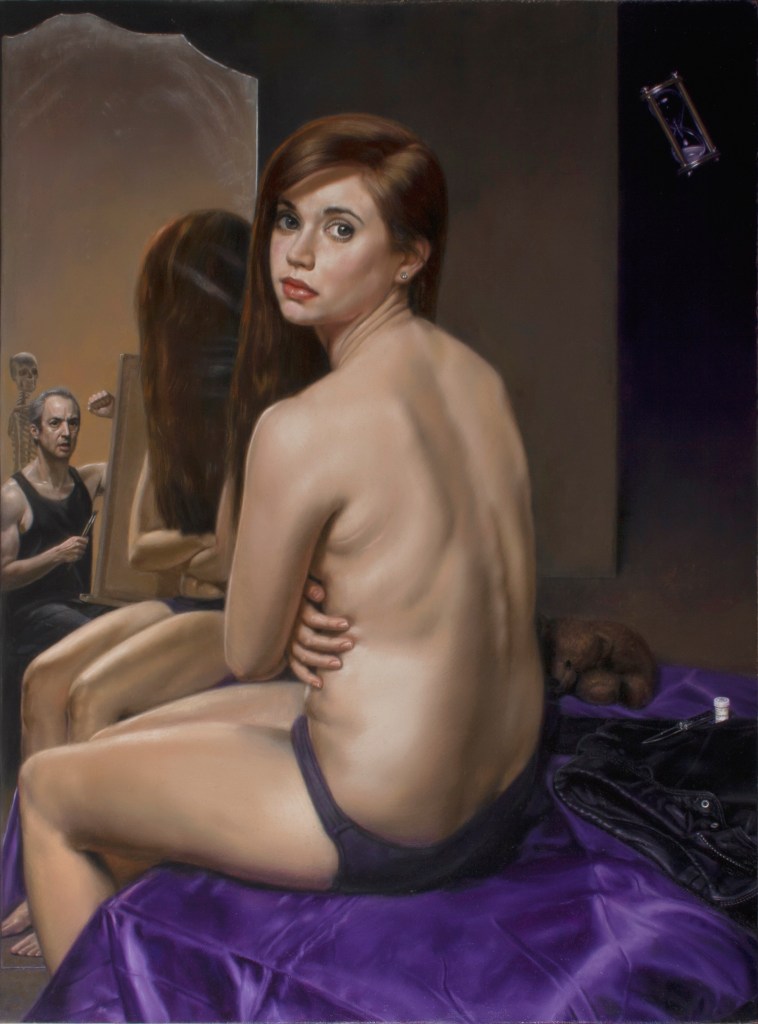
Scott Douglas Jacobsen: Okay, so we are online. You are a classical realist living in California. How did you come to focus on Classical Realist art?
Lance Richlin: I always thought it was the best kind of art. I would rather paint like Rembrandt than Jackson Pollock.
Jacobsen: [Laughing].
Richlin: It would never occur to me to try anything else. Once I decided to do it, it took 20 years to learn how. Frankly, I think that other forms of art, lesser forms of art, in my opinion, aren’t worth the effort.
Jacobsen: How are you defining them as “lesser forms of art” or not worth the effort? What factors are coming into play there?
Richlin: First of all, I would not say I like looking at abstract art. Other than being a somewhat attractive arrangement of colour. It doesn’t appeal to my eye. Also, I would rather look at human beings doing things. I would rather look at a painting with a clear message about something I care about than an arrangement of shapes and colours. I realize this will hurt many people’s feelings if they would rather look at shapes and colours, which are more powerful. I like looking at art that has a message. That means something to me. I like looking at beautifully illustrated humans in their activities. There’s not much else in life.
Jacobsen: Now, what do you think is the appeal to other artists, other viewers of art, of looking at arrangements of colours with a deeper human-centered meaning?
Richlin: When you go into an office building, If they have a giant, a six by 10-foot canvas with blue and yellow shapes, that kind of helps the decor of the building. If it goes well with the rest of the decor and the office, and if it doesn’t challenge anybody, an equal size of a realist painting might add a point of view. Some people may not like the point of view, besides the fact that few people can do realism well. So, a lot of the time, people buy embarrassing and poorly done realist paintings. Once you get into figurative art in an office building, you take many chances. If I were to say what the genuine appeal of abstract art is in 1,000 years when they find these things, they’d say, “Well, this looks better than wallpaper. It is a little more interesting. It is just decoration.” I think there is a club in the international art world where they use paintings for social and financial purposes. You can money launder with abstract art. Since almost anybody can do it, you can say, “This is worth a certain amount of money.”
Look at Hunter Biden; he assigned a price to his work. Suddenly, he was getting millions of dollars to influence his father. There are sincere abstract artists out there who are putting messages into their work. But then, you can’t simply use pure colour and shape. You have to start putting in collage photographs or found objects. Then you can start giving a message of some kind. It may be emotional. It may be clear if you start adding writing. They can do that, too. I don’t know why that is better than a Norman Rockwell illustration, where you see exactly what the artist is trying to point out. You understand it. It’s beautifully designed and interesting. I find looking at women, for example, to be more interesting on that basis alone than looking at shapes and colours. Also, I find looking at human flesh, older adults – their eyes, theirhands – more interesting than looking at shapes and colours.
Jacobsen: Was there an evolution of your early artistic development that led to this Classical Realist frame of mind? Or was it that you saw it and went into it?
Richlin: You’ll hear this from most artists of my era. I tried to learn to draw accurately. At the time, the art schools were dominated by abstract artists who didn’t know how. So, I was expelled from art school. I learned how to draw and paint by picking up tips and practicing like crazy for years. Then, I taught myself sculpture, pretty much. I did have a marble carving teacher named Memo Memovic. So, it was very haphazard because it wasn’t given freely, and because I wasn’t forced to do it in an art school, I became more obsessed with technique, which sometimes happens with people. They say, “If nobody is going to show me the right way, I am going to make damn sure I know the right way.” That is the attitude of classical artists.
Jacobsen: What part of the body do you find the hardest to put together on a canvas?
Richlin: A classical master is an expert in the whole body. I know anatomy backward and forward. But You have to treat each part of the body–the knees, the ankles, the elbows–like they’re the face. Most artists will focus on the face. If you are a classical artist, then you are in the tradition of the masters of the Renaissance. Then, you need every part of the figure to be equally loved. The landscape in the background, you have to care about. The still-lifes that the characters are holding. You have to care about them as much as any other part of the painting or sculpture.
Jacobsen: Who in the Renaissance exemplified that balance of art presenting the body?
Richlin: What happened was the Dutch began to paint portraits in the early Renaissance. I’ll start at the beginning. Sculpture became realistic before painting. So, there were many very accurate sculptures in the early Renaissance when they were recovering from the Medieval Period when all the techniques were lost when Rome fell. Art gradually became more sophisticated and more advanced in technique. Sculpture is, in some ways, a simpler art form. It became more realistic. Then, the Dutch became very good at highly realistic heads and hands in the North. Then, in the South, the Italians studied anatomy and tried to indicate it in their painting. So, it was a combination of Holland and the Flemish, the Belgians, and the Italians who brought shared techniques and innovations. Eventually, you had the Rennaissance.
Jacobsen: Is there anyone in the Rennaissance who you take as a figurehead?
Richlin: As far as sculptures go, there are dozens of great sculptors, e.g., Bernini and Michelangelo. As far as oil paintings go, I don’t use Rennaissance techniques. I use elaborate techniques developed 100 years later. So, my hero from the Baroque Era is a Spanish artist born in 1591, a very late Renaissance period. He lived to around 1652 or something like that. His name was Jose de Ribera. He was a contemporary of Rembrandt. They call him the “Spanish Rembrandt.” Of course, Rembrandt is a hero of mine. They were both followers of Caravaggio. He was the bridge between the Renaissance and the Baroque Era. He was an Italian who brought realism to the world. Without Caravaggio, art would look very peculiar. He was the first artist to make painting look natural, like something we would be used to seeing. That would fit well into the modern world.
Jacobsen: When did you start on this particular path – painting, sculpting, and the like? Not necessarily in a formal educational setting.
Richlin: Like most children, I got good at drawing because I was alone so much. I didn’t have as many friends. The kids who practice more alone end up being exceptional compared to their – I won’t say their colleagues – contemporaries who are out playing baseball and running around. Anything you practice as a kid, you are going to get a little better at it. There’s no such thing as natural talent. The difference between getting good at something good as a kid and being special in high school, and being professional, is the difference between being in little league and the NFL. You are not an artist until you have trained at a professional level.
Jacobsen: When you had your first proper sale of a professional piece, whether a sculpture or painting, how did you feel?
Richlin: The pieces were sold for about $50. I didn’t feel good at all. I felt, “This is going nowhere.” The models that I hired to do the paintings cost more than I got for the paintings. So, it gradually increased from a hundred dollars a painting to thousands and thousands. Frankly, I’ve rarely gotten enough to really change my life with my paintings. Even if you get 25,000 per painting, I’ve gotten that a couple of times. How long can you live on $25,000? Maybe six months in America, LA. Painting usually takes a year to do. You’re not going to sell $25,000 paintings very often. If you are a normal artist, you will make a sale like that half a dozen times in a lifetime. The money is always disappointing. It cannot pay for what you put in, even if it is a lot. I will say it again to make it clear. If it takes a year to do something, and you only get $12,000 for it, then $12,000 seems like a lot of money, but you cannot live on it.
Jacobsen: How do artists make a living when they’re below what they need to sustain themselves? What do they pick up on the side?
Richlin: There are three things that can happen, okay? You can get really lucky and have a manager or a gallery that is making you famous. Then you can make a fortune. You can make hundreds of thousands of dollars. But that’s a minuscule percentage of artists. The rest of them have to teach and do portraits, which is what I do. Sometimes, you can get into a niche where people like the little landscapes that you do. You can do them for office buildings. I did a stint where I sculpted toys. The trick is doing these things but finding enough time to do your art. So, it is always difficult to carve out the time to do the art and, at the same time, make enough money to make a living.
Jacobsen: Are there things artists do with their skill set to survive that they would consider degrading to the artistic process in other contexts?
Richlin: I didn’t find toy sculpting to be degrading because it was honest work. Kids need toys. I did them as well as they could be done. I was quite proud of the ones I did. I was doing the realistic toys. They came out pretty. Here is one that I did. It is, actually, a pretty thing for a toy. The thing is, What I object to is fraudulent art that you actually say is your art; I’ll give you an example. Some artists will do “cloying, sickly sweet art.” Just to make money, they will have shows of little girls holding bunny rabbits or women in flowing dresses walking along the beach or puppies. There are lots of galleries that will sell stuff like that. They sell like hotcakes. I would rather sculpt a toy or do an illustration for Batmanthan do something I said was my art, but instead, it was something to make money. Because when you do that, what you are doing, you are degrading culture. It is saying, “Art should be nauseatingly sweet.”
Or other forms of art are equally bad. Many artists do Western Art, which is art with cowboys in them: cowboys and Indians. Some of these cowboy artists grew up in Texas. It feels natural for them to do that. I don’t have a problem with that. A lot of artists do it for the money because people like paintings of cowboys. I don’t know why. But they clearly really don’t give a damn. I knew an artist. There was an artist who was quite famous for doing religious art. He was a young man. He acquired a high level of skill. He was using his paintings to depict the life of Jesus. He was a very religious young man. He figured out he could make more money painting cowboys. He switched right over. Now, he is a famous artist doing cowboy paintings. That, to me, I would rather sculpt toys. That’s more honest. Do you see what I am saying? Also, as I say, it is a certain responsibility to your culture. If you are going to propagate the idea that cowboys are the highest form of art or that little girls holding puppies are the highest form of art, you are kind of a fraud to yourself and society. If people were looking around and couldn’t find paintings of little girls holding puppies, maybe art would be different. Maybe there is something other than that. We should be looking for that in art. If paintings were about the Holocaust or tragedies, people might say, “Gee, maybe this artist has some message about tragedies. Maybe I can look at tragedies without being made depressed.” For example, I’d rather walk into a house with paintings about serious subjects than a house with decorative paintings.
If people could get used to the idea that a painting is just like a film, you want to see a little action when you go to a movie. You want to see a little risk. You want to see a problem. That’s what makes the film interesting. It shouldn’t be completely decorative just because it happens to be hanging in your house. Do you see what I am saying? I would rather see a painting about something interesting, even if it didn’t go with the colours of my couch.
Jacobsen: What do you think is the aim and highest representation of Classical Realism in the early 21st century?
Richlin: I mentioned Norman Rockwell earlier because his art makes it easy for people to understand my point and where I am coming from. That is, you have a little message. You have humans carrying out that message. They are illustrating it. You understand. There are dozens of artists doing that today. They have to look for it. They are not easy to find. Artists are doing that today. Their messages are all kinds of things. Some artists paint happy messages, but they are genuine. Some artists paint sad messages. Some artists are themselves bizarre and like to paint bizarre things. In other words, as an artist, you can paint about whatever you want. That’s one of the great things. The more you paint whatever you want, the less likely someone will like it. Because very few artists, when they’re doing personal work, very few of their fantasies correspond with other people. If you have a fantasy that everyone else is thinking, you’re more likely to sell that painting. Your fantasy will be deeply personal and can only be related to an elite number of people. I’ll give you an example.
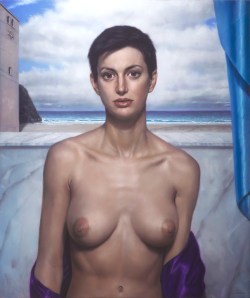
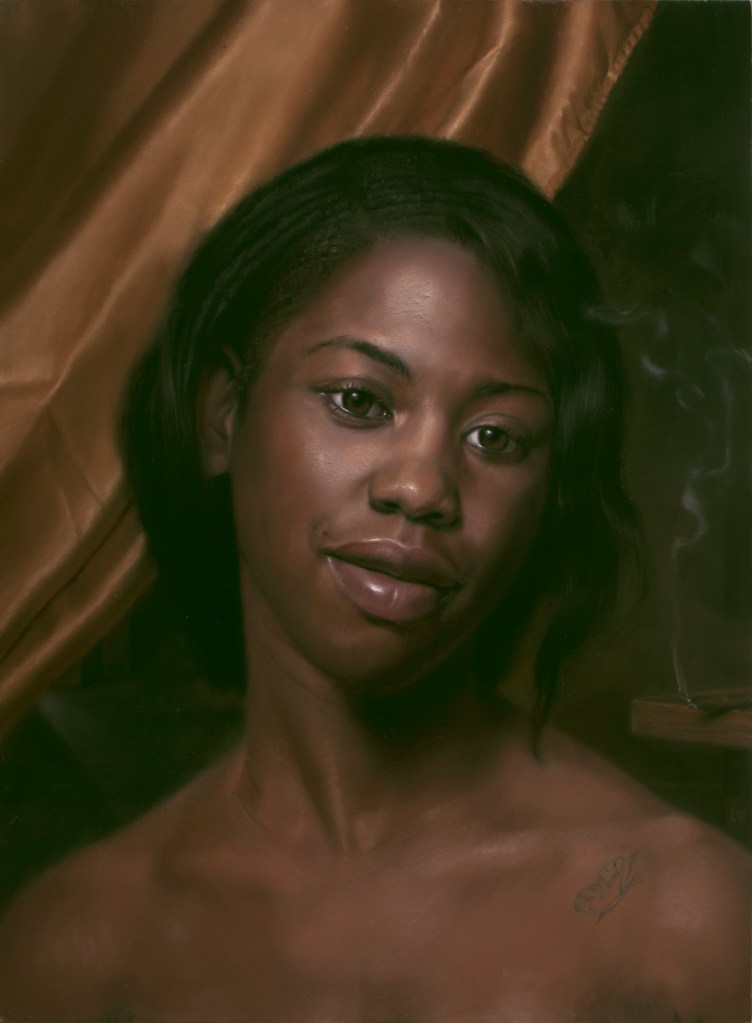
If you paint a pretty girl, you can, honestly, paint a pretty girl. There is no fraud about it. Some girls are pretty, and some girls aren’t. But all of the pretty girls that I have painted immediately were bought. Fairly quickly, people snatch them up. I know if I paint a man. It might sit in my studio for the rest of my life. So, you choose what you are going to paint. You try not to let the subject matter be tainted by whether someone wants it. Your goal is to express things nobody else is thinking, if possible. Then, your work is truly valuable because it enlarges civilization. It is the new insights that drive civilization forward. So, the question is: How do you get new insights? Why would an artist have an insight that nobody else has? That’s where you have to struggle to be creative and original and understand things on a deeper level or a level in a way that is new to people. That is a very admirable thing when you can do it.
Jacobsen: Within a lot of Western Europe and North America, there is a decrease, given the demographic numbers of Christian culture and iconography. They have been long-term staples of imagery for the culture, too. How does this play into the Classical Realist art form when religious iconography becomes a representation seen thoroughly within cultural history and then in the present?
Richlin: You’re saying, “Christian iconography is old-fashioned.”
Jacobsen: No, not old-fashioned, more, it is something throughout the culture. Though given demographic numbers, there has been a decline in the number of self-identified Christians in North America and Western Europe. By inference from that, there would likely be fewer representations of that iconography. How is this historically represented in the culture? How does this still play a role in art representation when you have a more naive eye? What do the tools of classical realism look like to depict various narratives within biblical texts, for instance?
Richlin: There is an artist out there named Anthony Visco. He does art for the Church. It’s marvellous. You could express Christian ideas in a modern way. As long as people believe in God, there will be fresh interpretations of spirituality; I don’t care if it is a sculpture of Jesus that looks like something done hundreds of years ago. You cannot change the Bible stories that much. A painting done today won’t be that different about Jesus than one done hundreds of years ago if you’re depicting a Middle Eastern figure that lived in the Roman Era. There are spiritual insights that you could paint now. I’ll get right to the point. I spent four and a half years as a lay monk practicing Buddhism. I was meditating every day. I got very unusual insights. That you don’t see or hear about very much. That is what I depict in my art. I have another friend named Art Hughes, an artist. He was in horrendous combat in Vietnam. He paints beautiful paintings about the war in Vietnam, which he saw.
When I say beautiful, I mean classically. He is more of an impressionist. It makes it even more interesting. So, an impressionist is somebody who uses more exaggerated colours and a looser drawing technique. But the point is: If you have some insight about the old Christian culture that has come down to us, I think that is incredibly valid, even if it is the 21st century. There are all kinds of modern insights that you could express that could never have been expressed before. I like traditional painting methods to depict modern life. If it were well done, I would rather see an oil painting of Trump than a photograph. However, photography and films have been extremely important in depicting the modern world. I wouldn’t take anything away from the uses of photography.
Jacobsen: When you were a lay monk in the Buddhist tradition for four and a half years, a) what was the tradition you were aiming for, if any, within Buddhism? b) What were some of the insights that you brought from that experience into your art? Lay Buddhist, four and a half years, insights gained and applied to your art. What is the discovery?
Richlin: That’s a long question. When I was leaving my study of art, I realized that I didn’t have anything particularly important to say, so I thought that if I were to meditate all day, I would get insights. I did that. I meditated many hours every day for four and a half years. I studied the I Ching and mysticism of various kinds. I had a Zen master, eventually. I got some insights about life that I would not have gotten any other way. One of them is I came out with a belief in God in the same way I believe I am sitting here right now. I believe he hears my thoughts as much as I believe you are hearing my words. So, also, I believe that the laws of physics can be suspended. I believe in psychic powers. I believe levitation. It is a lot of things that you end up believing that you never thought you’d believe if you make that kind of effort. I try to depict that in my paintings. I have a number of paintings about that poorly express my insights about the spiritual world and about how it interplays with the world that we live in. I can send you images of these paintings. You can post them, somehow. But I have one painting where I try to show what my state of mind was like when I was feeling particularly enlightened. If you look at it, it is very odd. I think the best you can do with a painting is get people into the groove, so that they sense something spiritual is going on – which is good.
Because in a world that is, basically, atheist and materialist, anything that points to the spiritual world in a serious, convincing way is going to be helpful to people. I should say that I’ve done a lot of romantic themes too. My art is not just about spiritual things. I wish it was. I’ve painted a lot of pretty girls naked. I have painted pictures about more mundane things, more physical about life. So, not everything in my opus is spiritual.
Jacobsen: But there is an orientation that you got out of this work and Buddhism that really brought about a different frame on how to characterize both art and draw people, not at the point of a gun but, seduce them into a way of looking at the world that, in the current milieu, they may not have taken into account.
Richlin: Yes, that’s a way of putting it. Supposing you are an atheist or openminded, or an agnostic, you come into my studio. There are very impressive paintings that are obviously about something supernatural. Now, you can say, “This man is, obviously, delusional, but very convincing, has talent, and can spin a yarn.”Or you can say, “Gee, there seems to be something about this work that is very genuine and really gets me to think. Why does this artist do this? Where was he at?” You don’t have to think real hard about it. I don’t want youm to sit there pondering. When you leave, “There is something spiritual there. Even if I don’t believe in spirituality, this artist clearly does. He is depicting something. If he is telling a lie, he has certainly memorized the whole story. He has memorized every detail of the lie.” They say, “If you are going to tell a lie, you have to remember every detail about it, in case you are asked.”
Jacobsen: That’s right. I’ve heard that.
Richlin: When I do a spiritual painting, I do it elaborately and detail-oriented with great dedication. Either I am completely nuts or there’s something out there that I am trying to depict that I really experience. Either way, it is better art.
Jacobsen: How do you incorporate the I Ching in art, when you have incorporated into art? Are there examples we can see?
Richlin: Yes.

Image Credit: Lance Richlin.
So, what you have here is a man meditating, which is what I did plenty of, during that time, I got the feeling that I was being given insights that there was a living, breathing universe that would bring messages from the dark world. The world of mystery is dark. You cannot see into it. But I felt like it revealed insights to me. So, I painted this young woman in a shroud of darkness because she is emerging from the mysterious world. She is speaking into the practitioner’s ear to give him an insight. That’s the kind of thing that I am talking about.
Jacobsen: The thing behind the man, what is behind him?
Richlin: It is something to make the image more real. There is nothing spiritual about it.
Jacobsen: For the depictions of some of the other insights that you gathered through, say, mysticism, how does that influence the framing of the art?
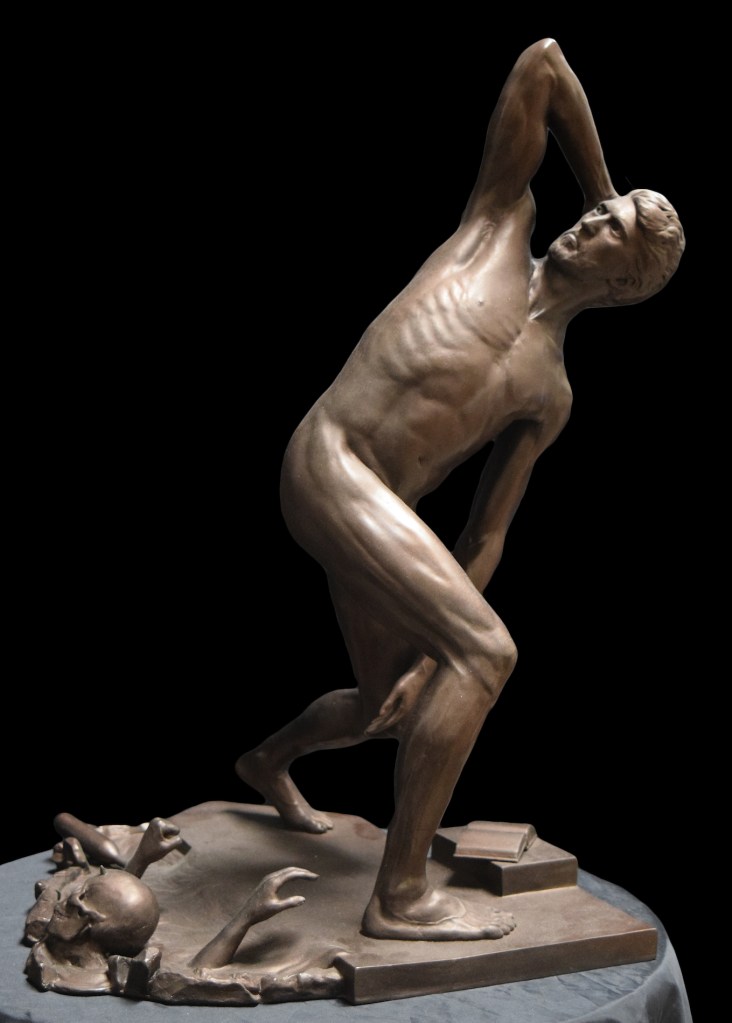
Richlin: This, for example, is a secular piece.

Image Credit: Lance Richlin.
Richlin: There is nothing spiritual about it. It is just a guy getting rejected, which I know a lot about. I thought I would show people that. Over here is a marble, I carved that out of a block of stone.

Image Credit: Lance Richlin.
Richlin: You asked about the I Ching. Here is a fellow reading the I Ching. It has the Yin Yang in the sky. I am trying to say, “The book, itself, relates to the way the universe actually is.” The painting is called “As above, so below.” What I am trying to say is that things that are symbolic are symbolic of things that are real, I do not know if you can see the hands and the book. He is having himself an insight.

Image Credit: Lance Richlin.
Jacobsen: The frame of using an elderly man with a beard. Is there a symbolic representation you’re hoping to portray using that as the characterization holding that text?
Richlin: I have a young man right here. Anybody can have an insight. I’ll be honest with you. Old people have more insight. That is one of the beauties of getting older. Here is a large painting about a state of mind, in this painting.

Image Credit: Lance Richlin.
Richlin: This is a giant painting. It is a big painting. This is about a world where everything has a soul. Everything is alive. It is more of a state of mind. I do not want to be too mysterious. But it is hard to explain this painting other than everything in it has a soul. You realize that when you are having a moment of enlightenment.
Jacobsen: I notice a lot of dark clouds, and the background tends to be quite dark in colouring.
Richlin: The thing is, I was trying to depict the gravity of the situation, the seriousness. That every object has dignity. Every object is equally important. So, the sink is just as important. It is taken as seriously as the young woman. The Buddha is symbolic as well. That this is all about what the Buddhists believe. So if you want to know more, you could study Buddhism.
Jacobsen: There is the bird in the upper right corner.
Richlin: I was trying to say even animals have a soul. Everything has its place in the universe. Everything has life. So, I tried to depict a variety of different things. Over here is a fellow.

Image Credit: Lance Richlin.
Richlin: Anyway, he is witnessing a miracle. Right here, there is an object levitating.
Jacobsen: It is almost a mix of surprise, but also a pulled back skepticism – like he is thinking about it.
Richlin: I don’t want him to be afraid. I wanted him to be surprised but say, “Huh, this is interesting.”
Jacobsen: In hindsight, if you take that four-and-a-half-year period as a spiritual encapsulation, transition, and period to where you are now, how do you put a coda statement on current philosophical and religious views, e.g., mysticism and lay Buddhism?
Richlin: What’s a coda statement?
Jacobsen: An end summary statement about them. Not only the depictions you’re portraying in your art in various ways but how all Buddhist practices brought together chores.
Richlin: I will answer what I can from that. I am not sure I understand. Once you’re on the path, you lead a spiritual life. Everything changes. Everything that you think. Everything you see and do is taken through the lens that God is watching you and that your life is meaningful. Again, if I do a portrait of somebody, I don’t do a sarcastic portrait. I do not make a fool of them. If I paint a nude woman, then I paint her respectfully. I’m trying to make my life meaningful. I am painting with the idea that I will look back on my life from the afterworld, the afterlife, and feel that I did what was my duty, that I should have done. Does that relate to your question? I am not sure if I understood.
Jacobsen: It gets at some point. It gets at the ultimate hope, in a way, for the work of your life, your lifework, with your art in an afterlife and viewing with a sense that you’ve done what you could and the best that you could with your craft in leading a spiritual life. Is that approximately correct?
Richlin: All artists imagine standing with Michelangelo’s ghost and saying, “Did I do the best I could?” You are limited a lot. We don’t all get to be rock stars. We don’t all get to release 100 songs that everybody listens to on the radio. We do not all get to do everything we can, but it is our job to do the best we can with the circumstances we’re given and be at peace with that to some extent.
Jacobsen: How has your style of selecting art topics changed as you have become an artist?
Richlin: It hasn’t changed much at all. I have always liked girls and portraiture. I became interested and a devotee of mysticism in my early twenties. That hasn’t changed. The only thing I can say is my work is more colourful now.Hopefully, it is better for it in a lot of ways.
Jacobsen: To that series you did with comedian Rick Rosner, why, or how, rather, did the idea of doing a show where you do a portrait of him while you two have certain social and political conversations, or yelling matches sometimes, together? How did that come to fruition as part of that show?
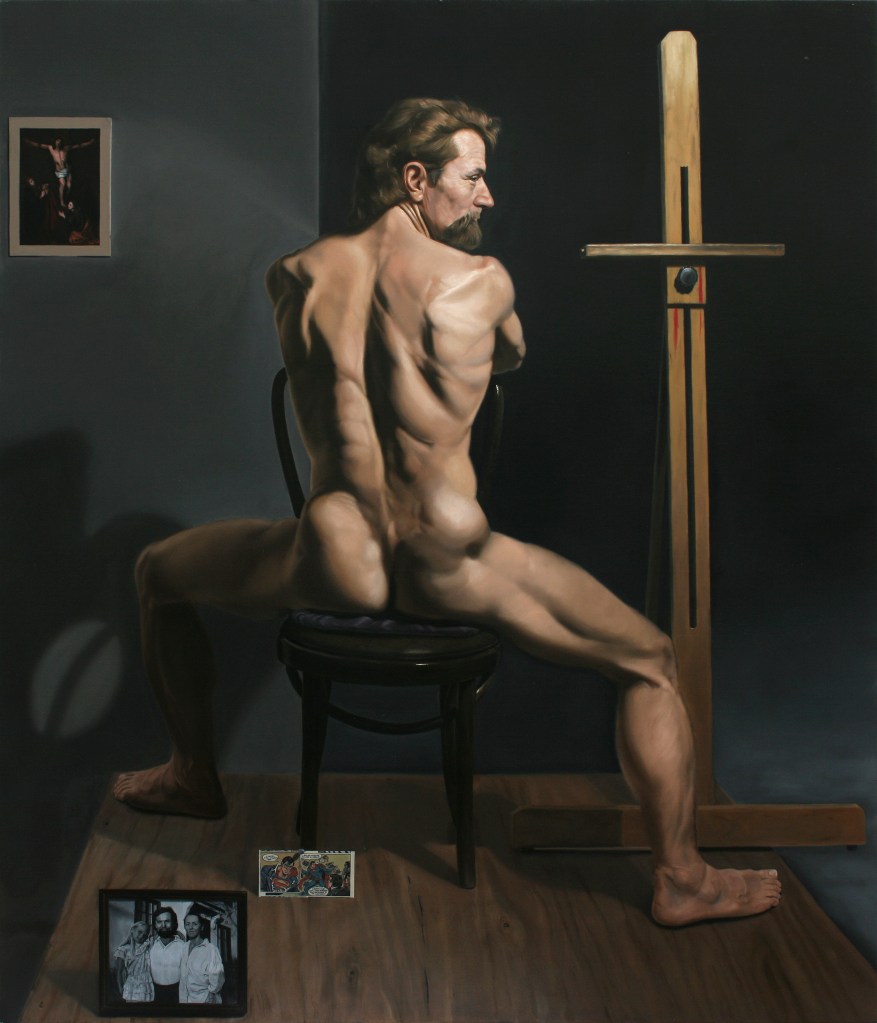
Richlin: People like to see how paintings are made even if they are not painters. They like to see people draw and paint. So, we thought that would be interesting. He is an art model. When we did the painting, he had a gorgeous body. He was willing to model. I was willing to paint. When I paint, I do not paint in silence. I always talk with the model. We realized. We’re talking together about things that may be very interesting to people. So, let’s do this with a camera, do a nicepainting, and have an interesting conversation; it worked out from that. We tried to hire different models besides Rick. The conversations are so offensive. You are right. I sense that you come from a very intellectual background, Scott. Our conversations are often shouting matches (Rick and him). Not a lot of decorum, which I regret. I think he does that intentionally when he doesn’t have an argument. I am taking a swing at him, but he’s not here.
Jacobsen: [Laughing] And our surprise third guest coming from Canada in LA.
Richlin: Yes, that is the idea of the show. It did pretty well. We get a lot of views. Honestly, we are both making the arguments we were supposed to make, according to our sides. Everybody who’s keeping track knows what the arguments are; one of the things that I found out is… I was listening to a former aide for Trump, Gorka. He was in the meetings where they were making Trump’s policies. He has a lot of details that I do not have, but our arguments are the same. He was debating with a very well-informed leftist on Triggernometry, the show. The leftist was carefully following current events and had arguments. I would not have been prepared for some of these things, but he is making the same arguments Rick would make. We all know what is going on, at least on our side. The strange thing about the show is how Rick hasn’t heard any of the arguments from my side. I am a little better informed. There is a leftwing point of view, which I am sometimes ready for. The problem that I have identified is that the leftists do not know what the rightists know. All the studies show that conservatives in America are better informed.
It sounds boastful. It is not. If you ask conservatives things about American history and current events, they always score higher. So, the conservatives know what is going on. The case of a lot of leftists. They don’t know what is happening in the world because their media protects them from Biden’s failures. If people knew all of the disasters occurring around the world because of Biden, they couldn’t possibly vote for him. There was a study done recently that the vast majority of Americans believe that crime is going up. There was a small minority who think it is going down. They believe them to be very, very rich white people who are Democrats who live in nice communities. Where they don’t experience the crime. Criminals don’t drive an hour out of where they live to commit crimes in rich leftist neighbourhoods. So, the crime is going on where everybody else lives. Anyway, I hope it was appropriate to bring these things about the show to your interview.
Jacobsen: What has been the feedback on that portrait of Rick by people who have watched the show develop and then be completed?
Richlin: To be honest, it has largely been ignored. The people who see the painting in person believe it is my best piece because I spent forever on it. Normally, models get about $30/hour. He gave me hundreds of hours of free time to noodle on it to my heart’s content. So, it came out the best I could do. As I say, people love the piece. But it is not famous or anything. I didn’t put it in a show or a museum or anything. It has had very little interest. None of my work is particularly interesting to the wider art world, if that is what you mean.
Jacobsen: What groups or art connoisseurs, those communities, have taken to your art? It may not be that mainstream hit song. Yet, it has its niche. You have your niche. Who are the central consumers of the art that you do?
Richlin: I have had a few art critics come to my studio and love my work. They can’t do anything. They cannot put my work in a museum. I occasionally have had one piece in a large show in museums. Museums show living artists’ work now. I have gotten my work into some pretty big museums with one piece, but not enough to change your career. Getting into a big gallery is the only way to change your career. That is where you start making massive amounts of money and having fame and notoriety. They get you into big museums if you get into a big gallery. If you have a one-man show in a big museum, you are guaranteed a good life. To become an artist who becomes popular is extremely complicated. There is a young woman out there who is very good-looking and Canadian. She became famous because, at 27, she started dating the 80-year-old top art dealer in New York. Her work is going for millions. There is that route.
Jacobsen: [Laughing].
Richlin: Which hasn’t been open to me. When I was a younger man, if I was gay, I would have had a thriving career by now. Some artists do great work and are snatched up by galleries when looking for new artists. It worked out perfectly. But most galleries are not looking for new artists. We are on the verge of a depression. So, nobody is looking for the latest piece that will sell for $50,000 in a depression.
Jacobsen: What has the advent of general artificial intelligence done to some of the art world?
Richlin: It doesn’t affect oil painters in the way that you’d think. The truth is that AI is just something on a screen that you make a print of, at best, which is a large sheet of photographic paper. So, they look like photographs, sometimes clumsy photographs. But we already have big printed photographs. So, it doesn’t change. If you liked oil paintings before, you’ll still like oil paintings now because I don’t think large printed photographs are a substitute for oil paintings by Rembrandt or Da Vinci.
On the other hand, many artists are using them as a tool. So, if they do not have a model they like or a background readily available, they will say, “Okay, I want a man sitting on a horse in the desert.” The AI will create that for them. Then they can do a painting from it. So, it saves them from going out to the desert or hiring models. It doesn’t destroy art. The one thing it has done is destroy industries like storyboarding. If you were a director, you could just say “I want to see my actress flying an airplane” instead of hiring a guy with a pencil and a pad. It will give to you faster than the storyboard artist could.
Those guys are in big trouble. They will lose their jobs. A basic illustration is things that you would see online or in magazines. Those guys are having big problems, too, because the client can say, “Look, I want to see my soda pop being drunk by a beautiful woman.” You do not need to hire an oil painter or an illustrator to do that now.
Jacobsen: Do you think this changes the nature of copyright now?
Richlin: No. I am saying that if you are selling soda pop, and if you decided along with the ad agency that you want people with long flowing blond hair to be drinking that soda pop, you do not have to hire an illustrator to paint that. You can say it. Then, it is done. If you want people drinking your soda pop who look like Tom Cruise, you can get that. If it doesn’t look exactly like Tom Cruise, you don’t even have to be thinking about him. There are a lot of industries. It affects a lot of people. It doesn’t affect me because oil paintings do not look like ads on the internet. The Mona Lisa only looks like something online when you look at it online. When you see it in person, it looks like an oil painting, which is entirely different.
Thank you for showing so much interest in me; I sympathize with you trying to ask questions.
Jacobsen: [Laughing].
Richlin: It is a lot of work. I think staying awake is a lot of work, as well as concentrating on what I am saying. I appreciate that. Thank you.
Jacobsen: As a final statement, what do you hope to accomplish as an artist? I am putting to the side for now your statements about looking at your work in the afterlife with a sense of ease, doing the best you can, and portraying things to potential buyers or the audience that you currently have.
Richlin: You are saying regardless of my satisfaction. What am I hoping to get to potential audiences?
Jacobsen: Yes, in terms of portraying and conveying.
Richlin: I have to be specific. I have a view of Christ which I do not see very often. During my meditation period, I decided that Christ was more of a symbolic figure of every human being and less a historical personage. That he was not God but more a representation of all of us, metaphorically. So, I would like to do a series of paintings depicting that. So that people could see. “That is a different way of looking at Christ.” I think that would be a valuable thing to leave behind.I think that’s important for people who are open now to a modern or a different view of traditional ideas. Is that helpful to you? Does that make sense what I said?
Jacobsen: That is helpful, fair, and understood. Thank you for your time.
Richlin: All right, thank you, bye.
Bibliography
None
Footnotes
None
Citations
American Medical Association (AMA 11th Edition): Jacobsen S. Conversation with Lance Richlin on Classical Realist Art Forms and Spirituality. June 2024; 12(3). http://www.in-sightpublishing.com/richlin
American Psychological Association (APA 7th Edition): Jacobsen, S. (2024, June 22). Conversation with Lance Richlin on Classical Realist Art Forms and Spirituality. In-Sight Publishing. 12(3).
Brazilian National Standards (ABNT): JACOBSEN, S. Conversation with Lance Richlin on Classical Realist Art Forms and Spirituality. In-Sight: Independent Interview-Based Journal, Fort Langley, v. 12, n. 3, 2024.
Chicago/Turabian, Author-Date (17th Edition): Jacobsen, Scott. 2024. “Conversation with Lance Richlin on Classical Realist Art Forms and Spirituality.” In-Sight: Independent Interview-Based Journal 12, no. 3 (Summer). http://www.in-sightpublishing.com/richlin.
Chicago/Turabian, Notes & Bibliography (17th Edition): Jacobsen, S “Conversation with Lance Richlin on Classical Realist Art Forms and Spirituality.” In-Sight: Independent Interview-Based Journal 12, no. 3 (June 2024).http://www.in-sightpublishing.com/richlin.
Harvard: Jacobsen, S. (2024) ‘Conversation with Lance Richlin on Classical Realist Art Forms and Spirituality’, In-Sight: Independent Interview-Based Journal, 12(3). <http://www.in-sightpublishing.com/richlin>.
Harvard (Australian): Jacobsen, S 2024, ‘Conversation with Lance Richlin on Classical Realist Art Forms and Spirituality’, In-Sight: Independent Interview-Based Journal, vol. 12, no. 3, <http://www.in-sightpublishing.com/richlin>.
Modern Language Association (MLA, 9th Edition): Jacobsen, Scott. “Conversation with Lance Richlin on Classical Realist Art Forms and Spirituality.” In-Sight: Independent Interview-Based Journal, vo.12, no. 3, 2024, http://www.in-sightpublishing.com/richlin.
Vancouver/ICMJE: Scott J. Conversation with Lance Richlin on Classical Realist Art Forms and Spirituality [Internet]. 2024 Jun; 12(3). Available from: http://www.in-sightpublishing.com/richlin.
License
In-Sight Publishing by Scott Douglas Jacobsen is licensed under a Creative Commons Attribution-NonCommercial-NoDerivatives 4.0 International License.
Based on work at www.in-sightpublishing.com.
Copyright © 2012-Present by Scott Douglas Jacobsen and In-Sight Publishing. Authorized use/duplication only with explicit permission from Scott Douglas Jacobsen. Excerpts, links only with full credit to Scott Douglas Jacobsen and In-Sight Publishing with specific direction to the original. All collaborators co-copyright their material and may disseminate for their purposes.

 In-Sight Publishing