Conversation with Professor Peter Singer on Artificial Intelligence and Wild Animal Suffering: Ira W. DeCamp Professor of Bioethics, Princeton University (3)
Publisher: In-Sight Publishing
Publisher Founding: March 1, 2014
Web Domain: http://www.in-sightpublishing.com
Location: Fort Langley, Township of Langley, British Columbia, Canada
Journal: In-Sight: Independent Interview-Based Journal
Journal Founding: August 2, 2012
Frequency: Three (3) Times Per Year
Review Status: Non-Peer-Reviewed
Access: Electronic/Digital & Open Access
Fees: None (Free)
Volume Numbering: 12
Issue Numbering: 1
Section: A
Theme Type: Idea
Theme Premise: “Outliers and Outsiders”
Theme Part: 29
Formal Sub-Theme: None.
Individual Publication Date: September 1, 2023
Issue Publication Date: January 1, 2024
Author(s): Scott Douglas Jacobsen
Word Count: 1,225
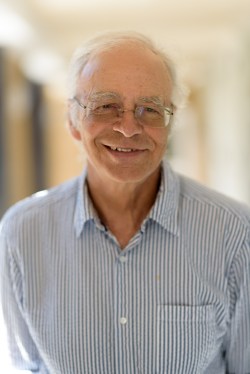
Image Credit: Seth Lazar
International Standard Serial Number (ISSN): 2369-6885
*Interview conducted December 16, 2022.*
*Please see the footnotes, bibliography, and citations, after the publication.*
Abstract
Prof. Singer’s biographic statement on his website says the following: “Journalists have bestowed on me the tag of “world’s most influential living philosopher.” They are probably thinking of my work on the ethics of our treatment of animals, often credited with starting the modern animal rights movement, and of the influence that my writing has had on development of effective altruism. I am also known for my controversial critique of the sanctity of life ethics in bioethics. In 2021 I was delighted to receive the Berggruen Prize for Philosophy and Culture. The citation referred to my “widely influential and intellectually rigorous work in reinvigorating utilitarianism as part of academic philosophy and as a force for change in the world.” The prize comes with $1 million which, in accordance with views I have been defending for many years, I am donating to the most effective organizations working to assist people in extreme poverty and to reduce the suffering of animals in factory farms. Several key figures in the animal movement have said that my book Animal Liberation, first published in 1975, led them to get involved in the struggle to reduce the vast amount of suffering we inflict on animals. To that end, I co-founded the Australian Federation of Animal Societies, now Animals Australia, the country’s largest and most effective animal organization. My wife, Renata, and I stopped eating meat in 1971. I am the founder of The Life You Can Save, an organization based on my book of the same name. It aims to spread my ideas about why we should be doing much more to improve the lives of people living in extreme poverty, and how we can best do this. You can view my TED talk on this topic here. My writings in this area include: the 1972 essay “Famine, Affluence, and Morality” in which I argue for donating to help the global poor; and two books that make the case for effective giving, The Life You Can Save (2009) and The Most Good You Can Do (2015). I have written, co-authored, edited or co-edited more than 50 books, including Practical Ethics, The Expanding Circle, Rethinking Life and Death, One World, The Ethics of What We Eat (with Jim Mason) and The Point of View of the Universe (with Katarzyna de Lazari-Radek). My writings have appeared in more than 25 languages. I was born in Melbourne, Australia, in 1946, and educated at the University of Melbourne and the University of Oxford. After teaching in England, the United States, and Australia, in 1999 I became Ira W. DeCamp Professor of Bioethics in the University Center for Human Values at Princeton University. I am now only teaching at Princeton for the Fall semester. I spend part of each year doing research and writing in Melbourne, so that Renata and I can spend time with our three daughters and four grandchildren. We also enjoy hiking, and I surf.” Singer discusses: Animal Liberation Now; synthetic constructs; billions of conscious beings now; and obscure research.
Keywords: Animal Liberation, Animal Liberation Now, artificial intelligence, Australia, conscious, ethics, feeling, morality, Peter Singer, suffering, Yip Fai Tse.
Conversation with Professor Peter Singer on Artificial Intelligence and Wild Animal Suffering: Ira W. DeCamp Professor of Bioethics, Princeton University (3)
Scott Douglas Jacobsen: And back to the text itself, for the update, Animal Liberation Now, what was sort of the reason for the expansion on the concepts, arguments, evidence, for you?
Prof. Peter Singer: The book was fully first published in 1975. It was fully updated in 1990. But it hasn’t been fully updated since then. The text was getting out of date. Some of the core ethical ideas are valid. There has been a lot of discussion about them. I don’t see anything that has made reason to change the core ethical ideas, including what I said here: For any being capable of feeling pain, the pain of that being ought to get equal consideration to similar pains of humans or other beings. So, that argument is still there. But the book has a long chapter on factory farming and the way animals are treated there, and how that developed, and another long chapter on the use of animals in research. All of the information in those chapters was 30 years out of date. That’s not good. If I want the book to remain relevant, and if I want people to keep reading it, it needs to give them up to date information about the world in which they’re living, not the world in which their parents were living. That was really the major factor that I decided it was time for a full update. In fact, it is such a complete change that that’s why the publishers decided to call it Animal Liberation Now rather than a third edition of Animal Liberation.
Jacobsen: There are some developments on the computer science end of things, on synthetic constructs. People are sort of making arguments about, some reasonable arguments about, borderline aware artificial intelligence: how that will play out or not. We don’t necessarily know. However, we know as natural beings ourselves. We can evolve conscious experience, e.g., pain, feeling, somewhat rational capacities. For artificially constructed ones that could be engineered through a different process than evolution itself, do you think a similar set of arguments could be played in some farther future than current with those constructs?
Singer: I think this issue is bound to arise in the future. It is difficult to know when. I don’t think we have any conscious artificial intelligence as yet. We have things that are absolutely amazing in terms of specific tasks that they are programmed to do. The obvious ones like Chess or Go. But we also have amazing machines that talk to us or appear to talk to us. Professors are being told that they can write essays as good as those of our students.
Jacobsen: [Laughing].
Singer: We wouldn’t know if a machine or a student had. But these are specific tasks. We know how they work. We have a sense of what they are doing and what we are programming them to do. I don’t think we have artificial general intelligence. That can adapt itself to any particular task in the way that humans can. I think if we do have that, then we will have to start seriously asking if this is a sentient being and has the same moral status as other sentient beings, including non-human animals even including us. It will face us at some stage. But I think it will be a little while, yet.
Jacobsen: In some real sense, we have billions of other less conscious but feeling, etc., organisms that are around with ethical consideration, right now. Can some policymakers, politicians, and intellectuals, run the risk of ignoring more immediate, long-term obvious ethical considerations of animals now when getting lost in hypotheticals about artificial intelligence in the near and far future?
Singer: There is a danger that is happening. It may already be happening because I have been a research project on AI and animals together with a Chinese, Hong Kong-based, researcher called Yip Fai Tse. He looked at a whole lot of statements about ethics and AI. I think he looked at 75 statements or something like that. I think he found only 2 out of those 75 that talked about the importance for AI ethics of considering anything like animals, even those too were not about individual animals. They were more about preserving nature and ecology, which would include animals. Whereas, there were quite a lot. I can’t remember the number. They talked about the importance of respecting AI when it may be a conscious benign and may have rights. It seems people who do AI ethics are more interested in conscious entities that don’t exist…
Jacobsen: [Laughing].
Singer: … than they are about dealing with the billions of conscious entities who do exist. Which, by the way, AI is already having an impact on. We already have semi-autonomous cars driving around and some test autonomous cars driving around. Clearly, they brake if a child comes out to the field of vision in front of them. Do they get programmed to brake equally hard if an animal does, and if so, do they do it for dogs and not for small rodents, or something like that or birds? That is one way AI affects animals. The one that is likely to be more impactful soon is AI running factory farms, China is one of them. It will remove human contact, which may be good for reducing the pandemic as far as risk goes, I suppose. Possibly, AI may not be sadistic and beat up animals because it is frustrated with some boss above telling it what to do, which can happen with lowly paid and somewhat oppressed workers on factory farms. So, you know, there can be positive pictures, but there can be a lot of negative pictures. Because you could crowd animals more than animals are crowded now. An AI may set off an alarm if things are going wrong and getting too crowded. I think AI is going to have an effect on billions of animals before very long. It is something that we should think about.
Jacobsen: What would you consider your most obscure but interesting piece of research on animal ethics?
Singer: Oh, on animal ethics, in Animal Liberation Now, I raise the question, which I didn’t raise in the earlier additions about suffering of wild animals. That is something which I had been aware of. It had been on the radar for quite a while. I pushed it to the sidelines only because I thought this was going to cause a clash between the values of animals welfare people and environmentalists. Politically, that is not a good thing because environmentalists and animal welfare people have been working together quite well. Green parties tend to have better animal welfare policies than environmentalists. I am now pursuaded that there are things that we might do for wild animal suffering that aren’t going to drastically change ecosystems. They might, for example, reduce the suffering of wild animals living in suburbia, which is very far from a natural, pristine environment. There are things you can do like installing bird-friendly glass so birds don’t fly into live windows, keeping cats indoors, or restricting in various ways so they don’t kill mice and small birds. There are a lot of things you can do you reduce wild animal suffering. And it is something that should be done.
Bibliography
None
Footnotes
None
Citations
American Medical Association (AMA 11th Edition): Jacobsen S. Conversation with Professor Peter Singer on Artificial Intelligence and Wild Animal Suffering: Ira W. DeCamp Professor of Bioethics, Princeton University (3). September 2023; 12(1). http://www.in-sightpublishing.com/singer-3
American Psychological Association (APA 7th Edition): Jacobsen, S. (2023, September 1). Conversation with Professor Peter Singer on Artificial Intelligence and Wild Animal Suffering: Ira W. DeCamp Professor of Bioethics, Princeton University (3). In-Sight Publishing. 12(1).
Brazilian National Standards (ABNT): JACOBSEN, S. Conversation with Professor Peter Singer on Artificial Intelligence and Wild Animal Suffering: Ira W. DeCamp Professor of Bioethics, Princeton University (3). In-Sight: Independent Interview-Based Journal, Fort Langley, v. 12, n. 1, 2023.
Chicago/Turabian, Author-Date (17th Edition): Jacobsen, Scott. 2023. “Conversation with Professor Peter Singer on Artificial Intelligence and Wild Animal Suffering: Ira W. DeCamp Professor of Bioethics, Princeton University (3).” In-Sight: Independent Interview-Based Journal 12, no. 1 (Winter). http://www.in-sightpublishing.com/singer-3.
Chicago/Turabian, Notes & Bibliography (17th Edition): Jacobsen, S “Conversation with Professor Peter Singer on Artificial Intelligence and Wild Animal Suffering: Ira W. DeCamp Professor of Bioethics, Princeton University (3).” In-Sight: Independent Interview-Based Journal 12, no. 1 (September 2023).http://www.in-sightpublishing.com/singer-3.
Harvard: Jacobsen, S. (2023) ‘Conversation with Professor Peter Singer on Artificial Intelligence and Wild Animal Suffering: Ira W. DeCamp Professor of Bioethics, Princeton University (3)’, In-Sight: Independent Interview-Based Journal, 12(1). <http://www.in-sightpublishing.com/singer-3>.
Harvard (Australian): Jacobsen, S 2023, ‘Conversation with Professor Peter Singer on Artificial Intelligence and Wild Animal Suffering: Ira W. DeCamp Professor of Bioethics, Princeton University (3)’, In-Sight: Independent Interview-Based Journal, vol. 12, no. 1, <http://www.in-sightpublishing.com/singer-3>.
Modern Language Association (MLA, 9th Edition): Jacobsen, Scott. “Conversation with Professor Peter Singer on Artificial Intelligence and Wild Animal Suffering: Ira W. DeCamp Professor of Bioethics, Princeton University (3).” In-Sight: Independent Interview-Based Journal, vo.12, no. 1, 2023, http://www.in-sightpublishing.com/singer-3.
Vancouver/ICMJE: Scott J. Conversation with Professor Peter Singer on Artificial Intelligence and Wild Animal Suffering: Ira W. DeCamp Professor of Bioethics, Princeton University (3) [Internet]. 2023 Sep; 12(1). Available from: http://www.in-sightpublishing.com/singer-3.
License
In-Sight Publishing by Scott Douglas Jacobsen is licensed under a Creative Commons Attribution-NonCommercial-NoDerivatives 4.0 International License.
Based on work at www.in-sightpublishing.com.
Copyright
© Scott Douglas Jacobsen and In-Sight Publishing 2012-Present. Unauthorized use and/or duplication of this material without express and written permission from this site’s author and/or owner is strictly prohibited. Excerpts and links may be used, provided that full and clear credit is given to Scott Douglas Jacobsen, or the author(s), and In-Sight Publishing with appropriate and specific direction to the original content. All interviewees and authors copyright their material, as well, and may disseminate for their independent purposes.


